
I love visiting presidential libraries. In fact, one of the items on my bucket list is to visit all 16 of them. So far, I have made it to nine. My favorite is the Ronald Reagan Presidential Library in Simi Valley, California. I’m not sure when I’ll make it to the newest one in North Dakota, but I’m determined to give it a try.
One of my more recent visits was to the Harry S. Truman Presidential Library in Independence, Missouri, just outside Kansas City. I had preached at a church in the Kansas City area that Sunday morning and decided to spend the afternoon exploring the library.
Presidential libraries are fascinating to me because they offer a glimpse behind the scenes of some of the most consequential leaders and decisions in American history. They provide insight not only into the presidency itself but also into the individuals who occupied the office and the circumstances that shaped their leadership.
There were several things that caught my attention during my visit to the Truman Library. One was seeing an actual safety plug from Fat Man, the atomic bomb dropped on Nagasaki, Japan, on August 9, 1945. The small green plug was designed to prevent the bomb from accidentally detonating during takeoff. Once the B-29 carrying the bomb was safely airborne, the crew removed the green safety plugs and replaced them with red activating plugs. Standing there looking at such a small piece of history, knowing the enormous destruction associated with the weapon it came from, was sobering.
But as fascinating as that artifact was, my biggest takeaway came from something much simpler. On one of the walls was a display titled “Six Jobs of the President.”
It outlined six distinct responsibilities Truman associated with the presidency: chief executive, commander in chief of the armed forces, head of foreign policy, political party leader, head of state, and legislative planner. One person. One office. Six very different responsibilities.
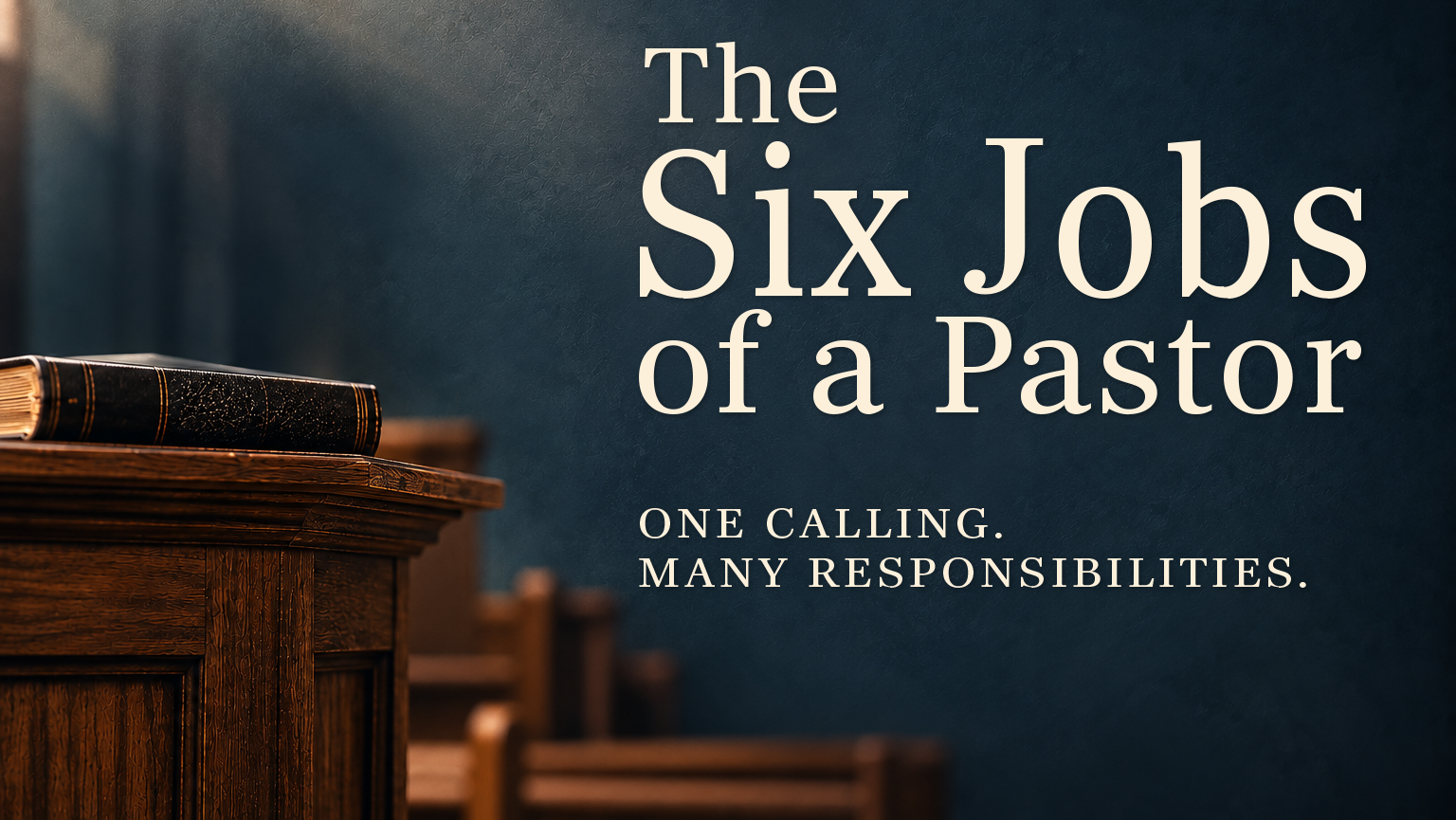
As I stood there reading the display, my mind began thinking about something completely different. I started thinking about pastors. There is an old joke that pastors have the easiest job in the world because they only work one day a week. Of course, anyone who has spent much time around a pastor knows there is a little more to the job than preparing a sermon and showing up on Sunday morning.
Having spent more than two decades in pastoral ministry, I can assure you that no two days are quite the same. One day might involve preparing a sermon, visiting someone in the hospital, counseling a struggling marriage, meeting with church leaders, and addressing an unexpected problem with the building. The next day could look completely different. And somewhere in the middle of it all, a pastor is expected to provide spiritual leadership for an entire congregation. The reality is that pastoral ministry is one calling with many responsibilities.
More Than a Job Description
When most people think about what a pastor does, preaching is probably the first thing that comes to mind. That makes sense. For many church members, the most visible part of a pastor’s ministry takes place behind the pulpit on Sunday morning. But preaching is only one part of the calling.
The New Testament presents a much broader picture of pastoral ministry. Pastors are called to shepherd God’s people, faithfully teach His Word, provide spiritual leadership, equip believers for ministry, protect the church from spiritual danger, and demonstrate Christlike character through their own lives. These responsibilities are not simply organizational expectations or duties developed by church tradition. They are rooted in Scripture.
Peter wrote to the elders of the early church:
“Shepherd the flock of God which is among you, serving as overseers, not by compulsion but willingly, not for dishonest gain but eagerly; nor as being lords over those entrusted to you, but being examples to the flock.” (1 Peter 5:2–3)
There is a lot packed into those two verses. Pastors are to shepherd, oversee, serve willingly, and lead by example. They are entrusted with people who ultimately belong to God. That last truth is especially important. A pastor does not own the church. He has been entrusted with the responsibility of caring for people who belong to Jesus Christ.
Six Jobs, One Calling
The more I thought about that display at the Truman Library, the more I began to consider how many different responsibilities are involved in faithfully serving as a pastor. Yes, there are more than six. Anyone who has served in pastoral ministry could probably develop a much longer list. Depending on the size of the church, a pastor might also serve as an administrator, counselor, financial manager, facilities supervisor, community representative, and occasionally even the person who cleans the toilets.
As I reflected on Scripture and my own years in ministry, six responsibilities stood out as especially significant.
- Shepherd. A pastor cares for the flock God has entrusted to him. This involves knowing people, loving them, encouraging them, and walking alongside them through life’s joys and difficulties.
- Preacher. A pastor faithfully proclaims the Word of God. His responsibility is not simply to develop a message people want to hear, but to communicate the truth God has given us in Scripture.
- Leader. A pastor provides direction for the church. He must exercise spiritual discernment, make difficult decisions, and help the congregation move forward in fulfilling its God-given mission.
- Equipper. A pastor prepares God’s people for the work of ministry. He is not called to do everything himself, but to help others discover and develop their gifts for serving Christ.
- Guardian. A pastor protects the church and its doctrine. He must remain alert to spiritual dangers, defend biblical truth, and care for the spiritual well-being of those under his leadership.
- Example. A pastor models the Christian life he calls others to live. His character, relationships, integrity, and personal walk with Christ should reinforce the message he preaches.
Each responsibility is distinct, yet they are closely connected. A pastor cannot faithfully shepherd people without feeding them God’s Word. He cannot effectively lead a congregation without equipping others for ministry. He cannot protect the flock without remaining grounded in biblical truth. And none of these responsibilities can be separated from the example of his own life.
A Calling Worth Understanding
The practical demands of ministry have changed considerably over the years. Today’s pastors navigate technology, social media, changing cultural expectations, increasingly complex administrative responsibilities, and challenges that previous generations could hardly have imagined. Yet the biblical foundation of pastoral ministry has not changed.
Whether a pastor serves a congregation of fifty or five thousand, whether he ministers in a rural community or a major city, whether he is just beginning his ministry or approaching retirement, these responsibilities remain important.
I also believe this is something church members need to understand. It is easy to evaluate a pastor primarily by what we see on Sunday morning. We know whether we enjoyed the sermon, appreciated the worship service, or agreed with a particular decision. But much of the work of pastoral ministry takes place outside public view. Understanding the breadth of the calling can help congregations better pray for, encourage, and support those God has called to lead them.
And for those of us who serve in ministry, periodically examining these responsibilities provides an opportunity for honest evaluation. Are we giving appropriate attention to each area? Have we become so focused on the things we naturally enjoy or do well that we have neglected other important parts of our calling?
No pastor will perform all six perfectly. Some will naturally be stronger in one area than another. But we cannot allow our strengths to become excuses for neglecting the rest of our calling.
Over the next several days, I want to examine each of these responsibilities and ask a simple question: What does faithfulness look like in each of the six jobs of a pastor?We begin where pastoral ministry must begin, with the heart of a shepherd.


Be the first to comment